Ansible splunk.enterprise Collection: Automating Universal Forwarder Lifecycle
By Luca Berton · Published 2024-01-01 · Category: installation
Learn how the new Ansible splunk.enterprise collection automates Universal Forwarder install, config, and upgrade across AAP 2.7 fleets at scale.
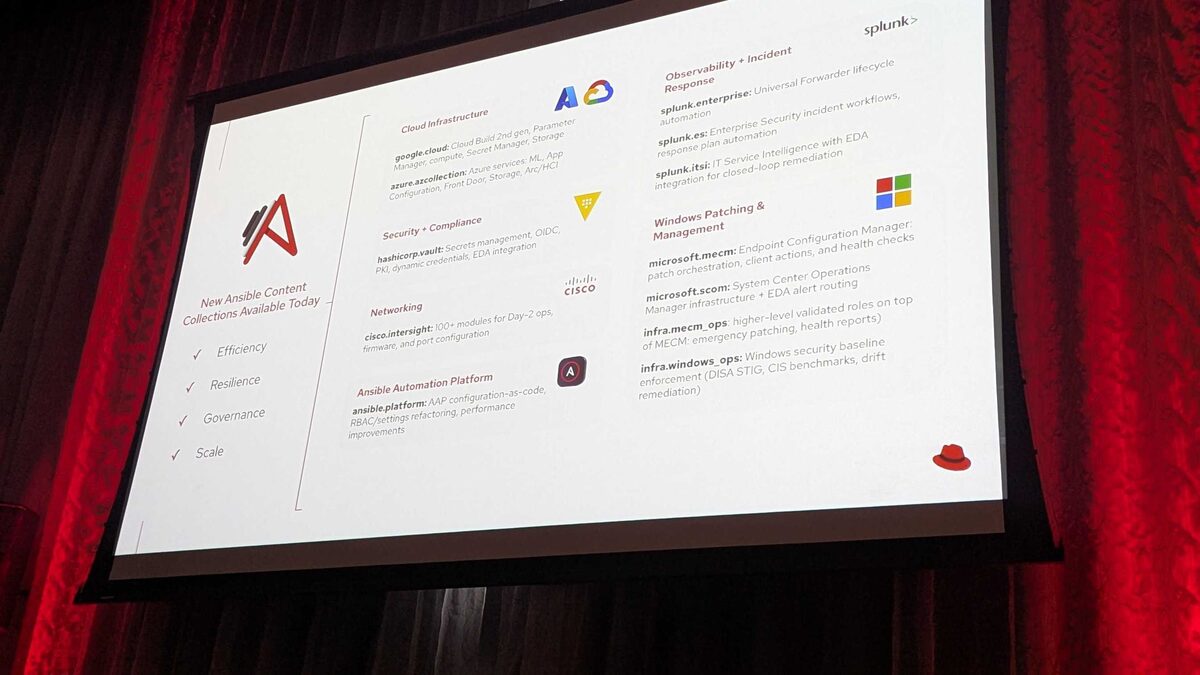
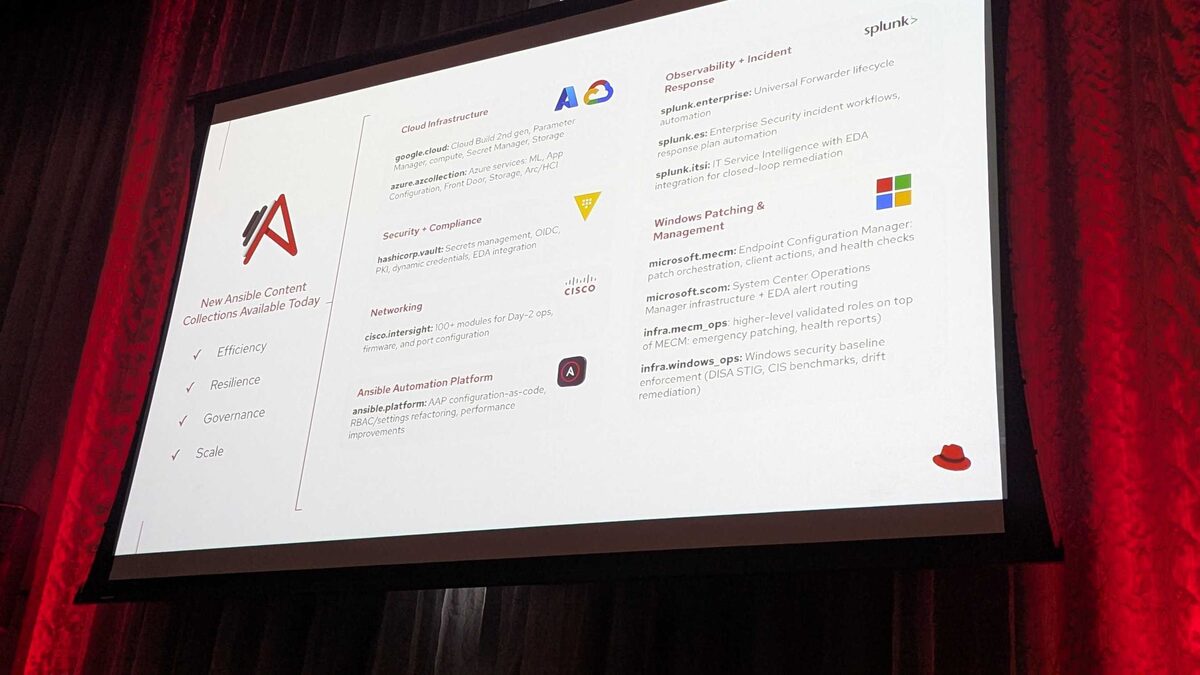
!New Ansible Content Collections Available Today — Red Hat Tech Day Netherlands 2026
Why Splunk Automation Belongs in Your Ansible Roadmap
At Red Hat Tech Day Netherlands 2026, held on 3 June 2026 in Bunnik, the Ansible team unveiled 12 new content collections for Ansible Automation Platform (AAP) 2.7, organized around four themes: Efficiency, Resilience, Governance, and Scale. Among the observability-focused additions was splunk.enterprise, a collection purpose-built to automate the lifecycle of the Splunk Universal Forwarder (UF) — the lightweight agent responsible for shipping logs and machine data from thousands of endpoints into a Splunk indexing tier.
If you run Splunk at any meaningful scale, you already know the pain: forwarders drift out of version alignment, inputs.conf files get hand-edited on production boxes, and onboarding a new fleet of servers into your logging pipeline becomes a multi-week ticket queue exercise. The splunk.enterprise collection exists to close that gap by bringing Universal Forwarder install, configuration, and upgrade operations under the same declarative, idempotent automation model that Ansible already applies to networking, cloud, and security workloads.
This announcement sits alongside two sibling Splunk collections revealed at the same event — splunk.es for Enterprise Security incident workflows and response plan automation, and splunk.itsi for IT Service Intelligence with Event-Driven Ansible (EDA) integration for closed-loop remediation. Together, the three collections signal a clear strategic direction: Red Hat and Splunk (a Cisco company) are aligning observability and automation into a single operational plane inside AAP.
See also: What's New in Event-Driven Ansible: AAP 2.6 and 2.7 Features
What the splunk.enterprise Collection Targets
The collection's stated scope, as announced at Red Hat Tech Day Netherlands 2026, is Universal Forwarder lifecycle automation. In practice, that lifecycle breaks down into a handful of recurring operational tasks that platform and SRE teams perform repeatedly across their estate:
- Installing the Universal Forwarder package on new hosts, whether physical, virtual, or containerized
- Deploying and templating forwarder configuration files (inputs.conf, outputs.conf, deploymentclient.conf)
- Registering forwarders with a deployment server for centralized app and configuration management
- Applying version upgrades in a controlled, rolling fashion across host groups
- Validating forwarder health and connectivity back to indexers or heavy forwarders
- Decommissioning forwarders cleanly when hosts are retired
A Representative Playbook Pattern
The example below illustrates the kind of task structure you should expect once the collection is generally available. Treat the module and variable names as illustrative rather than authoritative until the published documentation confirms them.
---
- name: Deploy and configure Splunk Universal Forwarder fleet-wide
  hosts: splunk_forwarders
  become: true
  vars:
    splunk_uf_version: "9.4.1"
    splunk_deployment_server: "deploy01.corp.example.com:8089"
    splunk_uf_admin_password: "{{ vault_splunk_uf_admin_password }}"

  tasks:
    - name: Ensure Universal Forwarder package is installed
      splunk.enterprise.uf_install:
        version: "{{ splunk_uf_version }}"
        accept_license: true
        state: present

    - name: Configure deployment client registration
      splunk.enterprise.uf_deploymentclient:
        target_uri: "{{ splunk_deployment_server }}"
        client_name: "{{ inventory_hostname }}"
        state: present
      notify: restart splunkforwarder

    - name: Push monitored input stanzas
      splunk.enterprise.uf_inputs:
        stanzas:
          - name: "monitor:///var/log/app"
            index: "app_logs"
            sourcetype: "app_generic"
          - name: "monitor:///var/log/syslog"
            index: "os_logs"
            sourcetype: "syslog"
        state: present

    - name: Validate forwarder connectivity to indexer tier
      splunk.enterprise.uf_health_check:
        expected_state: connected
      register: uf_health

    - name: Fail fast if forwarder is not phoning home
      ansible.builtin.fail:
        msg: "Universal Forwarder on {{ inventory_hostname }} failed health check"
      when: not uf_health.connected

  handlers:
    - name: restart splunkforwarder
      ansible.builtin.service:
        name: splunkforwarder
        state: restarted
This pattern mirrors what Ansible practitioners already do for every other agent-based tool: install, configure, register, verify, and gate the run on a health check before moving to the next batch — ideal for serial: rolling deployments during upgrade windows.
See also: AAP 2.7 EE Builder Step 1: Choosing a Base Image
How It Fits Alongside the Other Splunk Collections
| Collection | Primary Focus | Typical Consumer |
|---|---|---|
| splunk.enterprise | Universal Forwarder install, config, upgrade lifecycle | Platform/SRE teams managing log collection agents |
| splunk.es | Enterprise Security incident workflows, response plan automation | SOC and security operations teams |
| splunk.itsi | IT Service Intelligence with EDA integration for closed-loop remediation | ITOps teams pursuing AIOps-style auto-remediation |
Why This Matters for AAP 2.7 Adopters
Universal Forwarder sprawl is one of the most common sources of Splunk licensing and data-quality drift: forwarders left on outdated versions miss bug and security fixes, misconfigured inputs create duplicate or missing events, and manual registration steps mean new hosts can sit unmonitored for days. Wrapping this lifecycle in Ansible content delivers the same benefits the platform already provides elsewhere:
- Idempotency — re-running a playbook against an already-compliant forwarder produces no unintended changes.
- Auditability — every configuration change flows through source control and AAP job history instead of ad hoc shell sessions.
- Scale — rolling upgrades across thousands of forwarders become a
serialbatch operation instead of a manual runbook. - Governance — configuration-as-code for observability agents fits the broader Governance pillar Red Hat emphasized across all 12 collections announced at the event.
Key Takeaways
- The splunk.enterprise collection, announced at Red Hat Tech Day Netherlands 2026 (Bunnik, 3 June 2026), automates Splunk Universal Forwarder lifecycle tasks — install, configuration, deployment server registration, upgrades, and decommissioning.
- It is one of 12 new AAP 2.7 content collections spanning cloud, security, network, and observability domains, organized around Efficiency, Resilience, Governance, and Scale.
- It complements splunk.es (Enterprise Security incident workflows) and splunk.itsi (IT Service Intelligence with EDA integration), forming a complete Splunk automation story inside AAP.
- Expect the collection to follow familiar Ansible content patterns: modules for install/config/service state, composable into roles for common rollout and upgrade workflows.
- Teams managing large forwarder fleets should plan pilot rollouts against staging host groups before promoting playbooks like the one above into production upgrade windows.
See also: AAP 2.7 EE Builder Step 2: Adding Collections from Private Automation Hub
Related Articles
Category: installation