Introducing the New Ansible Galaxy
By Luca Berton · Published 2024-01-01 · Category: installation
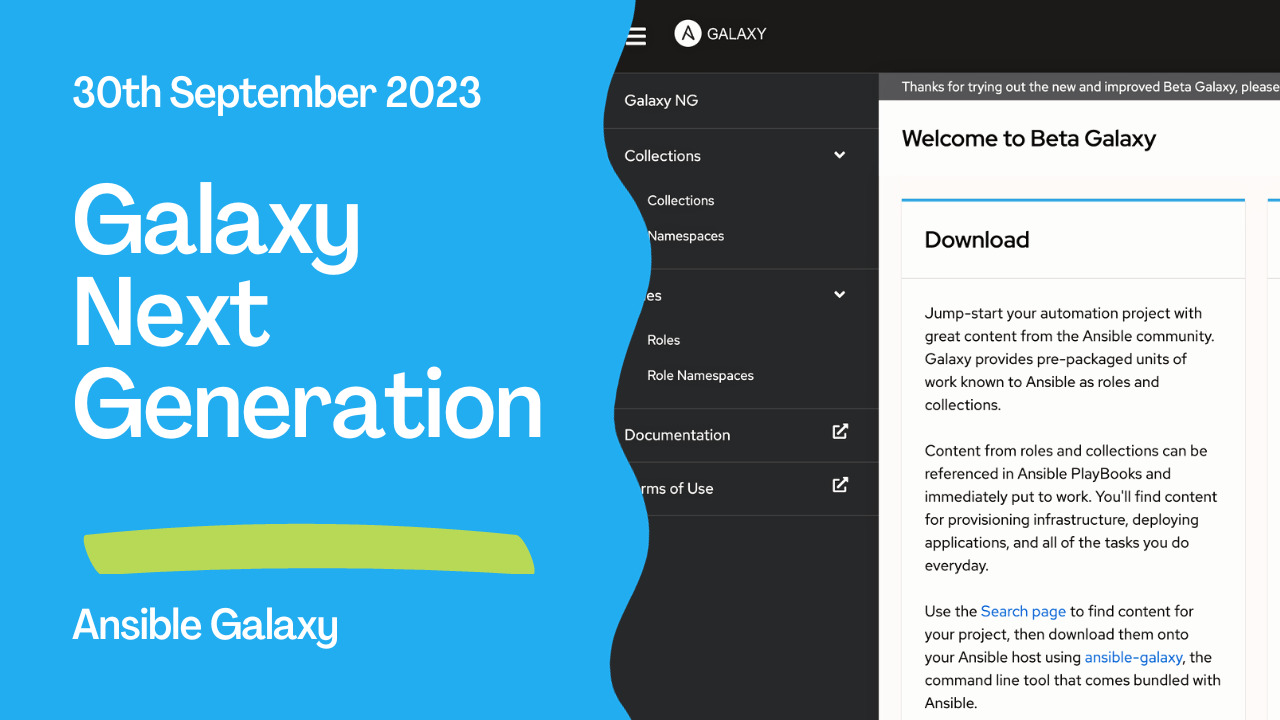
A Quantum Leap in Ansible Automation: The New Galaxy Unveiled on 30th September 2023.
Introduction
In the world of automation and orchestration, Ansible has long been a frontrunner, simplifying complex tasks and empowering users with streamlined solutions. At the heart of Ansible’s ecosystem lies Ansible Galaxy, a repository of roles and collections that accelerate automation development. And now, the Ansible Galaxy experience is about to get a significant upgrade.Over the past few months, the dedicated Red Hat Ansible team responsible for the Ansible Automation Hub and Ansible Cloud Automation Hub, accessible via console.redhat.com, has embarked on a mission to elevate the galaxy_ng code base. This code base powers the components mentioned above and is designed to replace galaxy.ansible.com with a brand-new, cutting-edge foundation.
See also: Ansible Galaxy Collections: Install, Use & requirements.yml Guide
The Vision Behind Galaxy_ng
From its inception, galaxy_ng was conceived with the ambitious goal of supplanting the aging galaxy.ansible.com while simultaneously serving as the core code base for the Automation Hub component within the Ansible Automation Platform. This bold vision has driven the team to work relentlessly on enhancing the capabilities of galaxy_ng, making it a robust and dynamic platform for Ansible users.Beta available
The enhanced galaxy is already accessible at beta-galaxy.ansible.com, where the team has meticulously synchronized the data to ensure it remains up-to-date and ready for users to explore.See also: Crafting and Publishing Your Custom Ansible Collection on Automation Hub
Transitioning to the Future
The moment we’ve all been waiting for is finally here. We are thrilled to announce that we will be transitioning galaxy.ansible.com to this new codebase on September 30th, marking a significant step forward in the evolution of the Ansible Galaxy. Our commitment to delivering the next generation of Galaxy services on this unified codebase remains unwavering.The transition process is straightforward for users who access Ansible Galaxy through the ansible-galaxy CLI or the new v3 API. Regenerate your access token, and immediately log in to beta-galaxy.ansible.com, where a world of automation possibilities awaits.
After the transition, the previous site will remain accessible at old-galaxy.ansible.com, serving as a read-only instance for reference and historical purposes.
Links
- https://beta-galaxy.ansible.com
- https://github.com/ansible/galaxy_ng
- https://github.com/ansible/galaxy_ng/discussions
Your Feedback Matters
As we take this momentous leap forward, the Ansible team values the input of our vibrant community of contributors and users. Utilizing the galaxy tag, they warmly invite all contributors to provide valuable feedback on forum.ansible.com. Your insights and suggestions are instrumental in shaping the future of Ansible Galaxy, and they are eager to hear from you.See also: Creating a New Ansible Collection: A Step-by-Step Guide
Conclusion
In conclusion, introducing the new Ansible Galaxy is a testament to Ansible’s ongoing commitment to innovation and excellence in automation. The transition planned for September 30th to this enhanced codebase represents a milestone in Ansible’s journey, and we are excited to see how it will empower users to achieve even greater automation capabilities. Stay tuned, stay engaged, and join us in this exciting new chapter of Ansible Galaxy.Related Articles
Category: installation
Watch the video: Introducing the New Ansible Galaxy — Video Tutorial