Expand a Virtual Disk in VMware vSphere Virtual Machine - Ansible module vmware_guest_disk
By Luca Berton · Published 2024-01-01 · Category: troubleshooting
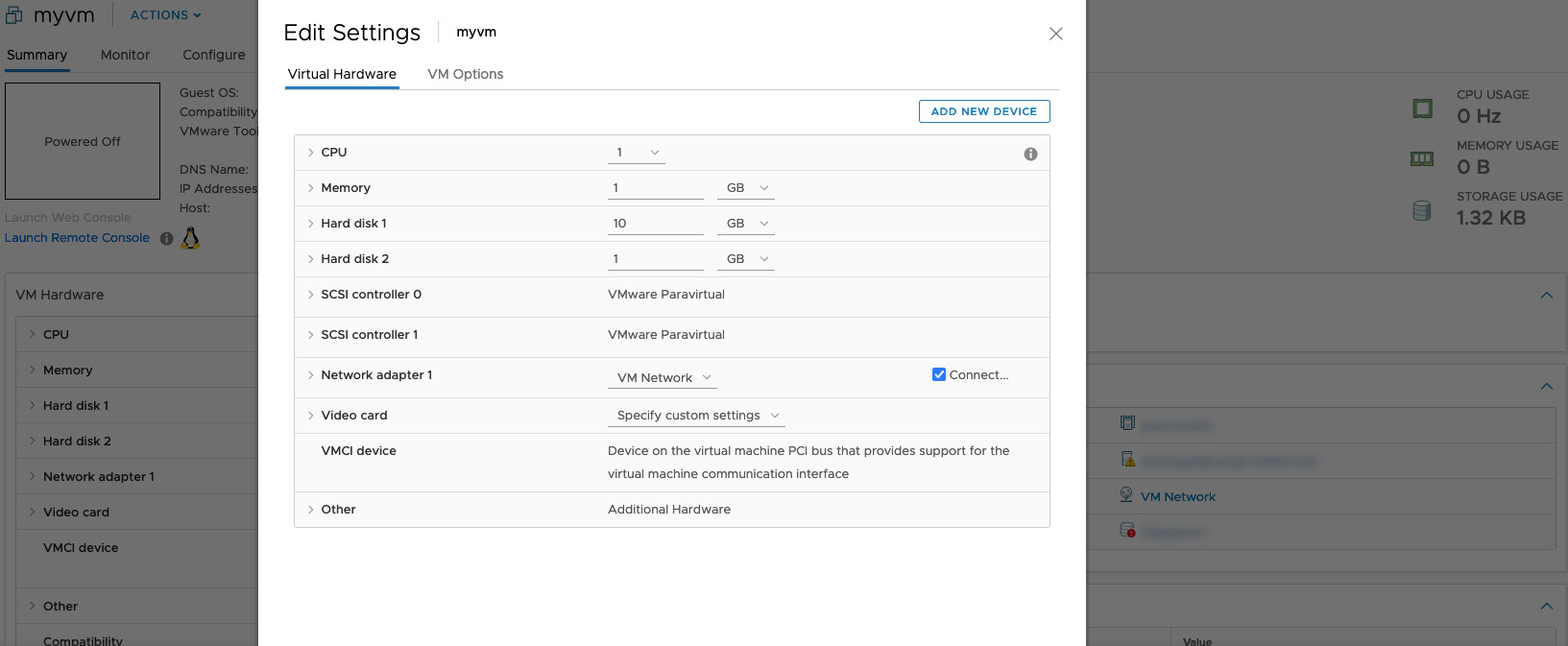
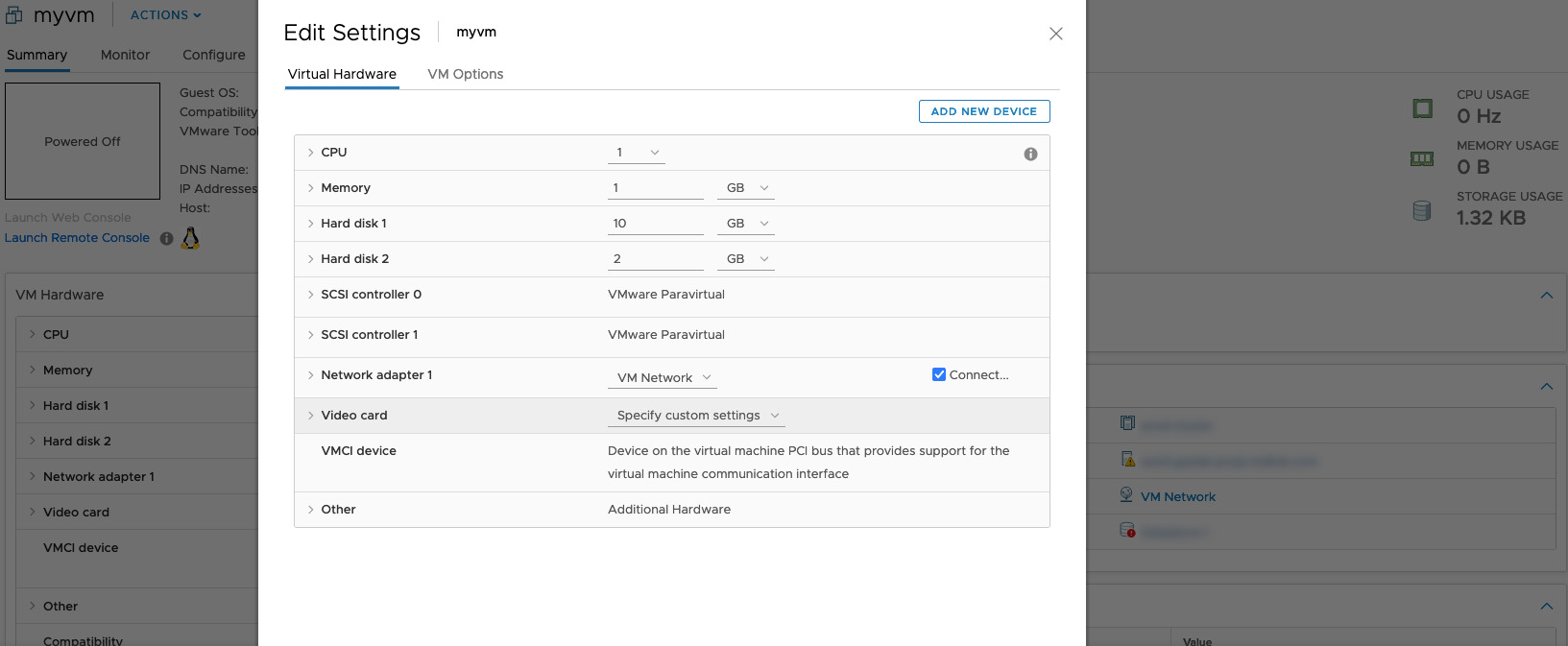
How to automate the expansion from 1GB to 2GB size Virtual Disk connected to VMware Virtual Machine guest named “myvm” using Ansible Playbook.
How to Expand a Virtual Disk in VMware vSphere Virtual Machine with Ansible?
See also: How to Add a Disk to a VMware VM Using Ansible Playbook
Ansible Expand a Virtual Disk in VMware vSphere Virtual Machine
community.vmware.vmware_guest_disk- Manage disks related to a virtual machine in a given vCenter infrastructure
vmware_guest_disk.
The full name is community.vmware.vmware_guest_disk, which means that is part of the collection of modules to interact with VMware, community-supported.
It manages disks related to a virtual machine in a given vCenter infrastructure.
Parameters
- hostname string / username string / password string / datacenter string / validate_certs boolean - connection details
- datacenter string - The datacenter name to which the virtual machine belongs to
- scsi_controller / unit_number / scsi_type string - SCSI controller details
- size / size_kb / size_mb / size_gb / size_tb string - Disk storage size
- disk_mode string - persistent / independent_persistent / independent_nonpersistent
vmware_guest_disk.
First of all, we need to establish the connection with VMware vSphere or VMware vCenter using a plethora self-explicative parameters: hostname, username, password, datacenter, and validate_certs.
Once the connection is successfully established you could specify the desired disk configuration, in this expansion, a disk is connected to a virtual machine.
The mandatory parameters are only datacenter and unit_number.
The datacenter parameter specifies which datacenter name the virtual machine belongs to, for resources allocations.
The disk must be connected to a SCSI controller inside the virtual machine, so you should specify all the small details like scsi_controller, unit_number, and scsi_type.
You might be interested in deep-diving into some performance analysis to properly adjust these parameters.
You could specify the disk size via various parameters according to the needed size unit: kb, MB, GB, TB, etc.
One most important parameter is the disk_mode, default to persistent mode, other options are independent_persistent and independent_nonpersistent.
See also: Configure Ansible Dynamic Inventory for VMware in Simple Steps
Links
## Playbook
How to Expand a Virtual Disk in VMware vSphere Virtual Machine with Ansible.
code
- vm_disk_expand.yml
---
- name: vm disk Playbook
  hosts: localhost
  become: false
  gather_facts: false
  collections:
    - community.vmware
  pre_tasks:
    - include_vars: vars.yml
  tasks:
    - name: expand disk in vm
      vmware_guest_disk:
        hostname: "{{ vcenter_hostname }}"
        username: "{{ vcenter_username }}"
        password: "{{ vcenter_password }}"
        validate_certs: "{{ vcenter_validate_certs }}"
        datacenter: "{{ vcenter_datacenter }}"
        name: "{{ vm_name }}"
        disk:
          - size_gb: "{{ vm_disk_gb }}"
            type: "{{ vm_disk_type }}"
            datastore: "{{ vm_disk_datastore }}"
            state: present
            scsi_controller: "{{ vm_disk_scsi_controller }}"
            unit_number: "{{ vm_disk_unit }}"
            scsi_type: "{{ vm_disk_scsi_type }}"
disk_mode: "{{ vm_disk_mode }}"- vars.yml
---
vcenter_hostname: "vmware.example.com"
vcenter_datacenter: "vmwaredatacenter"
vcenter_validate_certs: false
vcenter_username: "username@vsphere.local"
vcenter_password: "MySecretPassword123"
vm_name: "myvm"
vm_disk_gb: 2
vm_disk_type: "thin"
vm_disk_datastore: "datastore"
vm_disk_scsi_controller: 1
vm_disk_scsi_unit: 1
vm_disk_scsi_type: 'paravirtual'
vm_disk_mode: 'persistent'- inventory
localhostexecution
$ ansible-playbook vm_disk_expand.yml
[WARNING]: provided hosts list is empty, only localhost is available. Note that the implicit
localhost does not match 'all'
PLAY [vm disk Playbook] *******************************************************************************
TASK [include_vars] *******************************************************************************
ok: [localhost]
TASK [expand disk in vm] **************************************************************************
changed: [localhost]
PLAY RECAP ****************************************************************************************
localhost                  : ok=2    changed=1    unreachable=0    failed=0    skipped=0    rescued=0    ignored=0
idempotency
$ ansible-playbook vm_disk_expand.yml
[WARNING]: provided hosts list is empty, only localhost is available. Note that the implicit
localhost does not match 'all'
PLAY [vm disk Playbook] *******************************************************************************
TASK [include_vars] *******************************************************************************
ok: [localhost]
TASK [expand disk in vm] **************************************************************************
ok: [localhost]
PLAY RECAP ****************************************************************************************
localhost                  : ok=2    changed=0    unreachable=0    failed=0    skipped=0    rescued=0    ignored=0
before execution
after execution
Conclusion
Now you know how to Expand a Virtual Disk in VMware vSphere Virtual Machine with Ansible.
See also: Configuring Ansible for VMware: Complete Setup Guide & Playbook
Related Articles
Category: troubleshooting
Watch the video: Expand a Virtual Disk in VMware vSphere Virtual Machine - Ansible module vmware_guest_disk — Video Tutorial