Automating AI-Powered Graph Databases with Ansible: Insights from CfgMgmtCamp 2025
By Luca Berton · Published 2024-01-01 · Category: installation
Discover how Ansible can automate Neo4j GenAI environments, integrate OpenAI for RAG tasks, and optimize AI-driven graph databases.
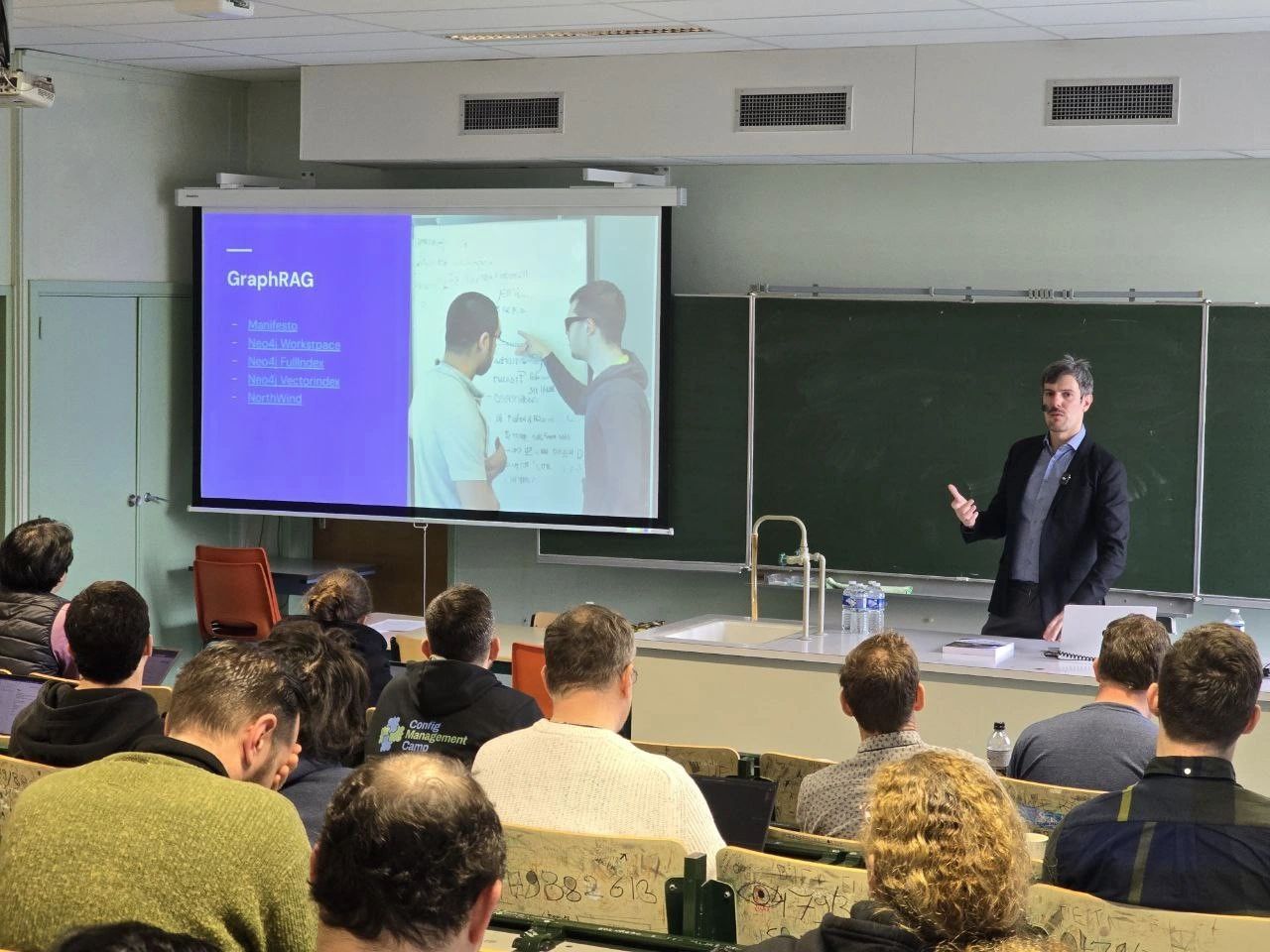
🚀 CfgMgmtCamp 2025: Automating AI-Powered Graph Databases with Ansible
Yesterday, at CfgMgmtCamp 2025, I had the privilege of presenting Automating AI-Powered Graph Databases with Ansible. It was an exciting opportunity to demonstrate how Ansible can streamline the deployment of Neo4j GenAI environments, integrate OpenAI for retrieval-augmented generation (RAG) tasks, and optimize AI-driven infrastructures.
The session was well attended by DevOps engineers, system administrators, and automation enthusiasts, all eager to explore how Ansible can simplify AI-powered database management. The enthusiasm and engagement from the audience made this a truly enriching experience.
---
See also: Luca Berton at CfgMgmtCamp 2025: Ansible Automation Expert on Neo4j GenAI
🌍 Why Automate AI Workflows with Ansible?
AI-driven graph databases like Neo4j GenAI are transforming knowledge graph applications, semantic search, and intelligent data retrieval. However, manual deployment and management of these environments can be complex and error-prone.
Ansible, as an Infrastructure-as-Code (IaC) solution, brings automation, consistency, and efficiency to these deployments. In my session, I covered three critical automation strategies:
- Automated Deployment of Neo4j GenAI Environments
- Leveraging Ansible playbooks to configure Neo4j, install dependencies, and set up AI integrations.
- Deploying Neo4j on-premises and across hybrid cloud environments.
- Integrating OpenAI for RAG Tasks
- Connecting Neo4j to OpenAI models via Ansible-managed configurations.
- Automating data ingestion and knowledge graph enrichment.
- Optimizing AI Workflows with Infrastructure-as-Code Best Practices
- Ensuring scalability and reproducibility in AI-driven workflows.
- Implementing security best practices and resource optimization.
🔥 Key Takeaways from the Session
- Neo4j + Ansible creates a powerful combination for AI-driven graph databases.
- Automation reduces deployment time and minimizes manual errors.
- RAG (Retrieval-Augmented Generation) workflows benefit significantly from Ansible’s ability to orchestrate AI pipelines.
- Hybrid cloud environments can be managed effortlessly with Ansible roles and playbooks.
See also: Ansible Nested Lists: Loop Over Lists of Lists (with_subelements, flatten)
🎤 Engaging with the DevOps & Ansible Community
One of the highlights of CfgMgmtCamp is always the community engagement. The Q&A session after my talk sparked insightful discussions on:
- Scaling Ansible for large AI workloads
- Handling security concerns in automation
- Integrating Ansible with Kubernetes for AI-driven deployments
---
✨ What’s Next?
CfgMgmtCamp 2025 was just the beginning! I’m excited to continue exploring AI automation, Neo4j advancements, and cloud-native Ansible deployments.
💬 Let’s keep the conversation going—reach out if you’d like to discuss automation strategies, Ansible best practices, or AI infrastructure solutions.
Until next time, happy automating! 🚀✨
See also: Setting Up Neo4j GenAI Environment on Fedora Using Ansible
Related Articles
Category: installation